LYF – Human-Centered Design for Remote Rehabilitation

Project Description
The Task
In the course Design of Human-Machine Interfaces, the task was to develop a concept for remote rehabilitation of stroke patients – with the goal of promoting hand functions of patients while keeping treating physicians updated on therapy progress. The entire UX process from research to final presentation was to be covered. This included: Research, concept development, personas, paper prototyping, wireframing, mood boards, screen design, storyboarding, video creation, and documentation.
Our Idea
To increase patient motivation and bring variety to the rehabilitation routine, we developed a concept based on modern technologies:
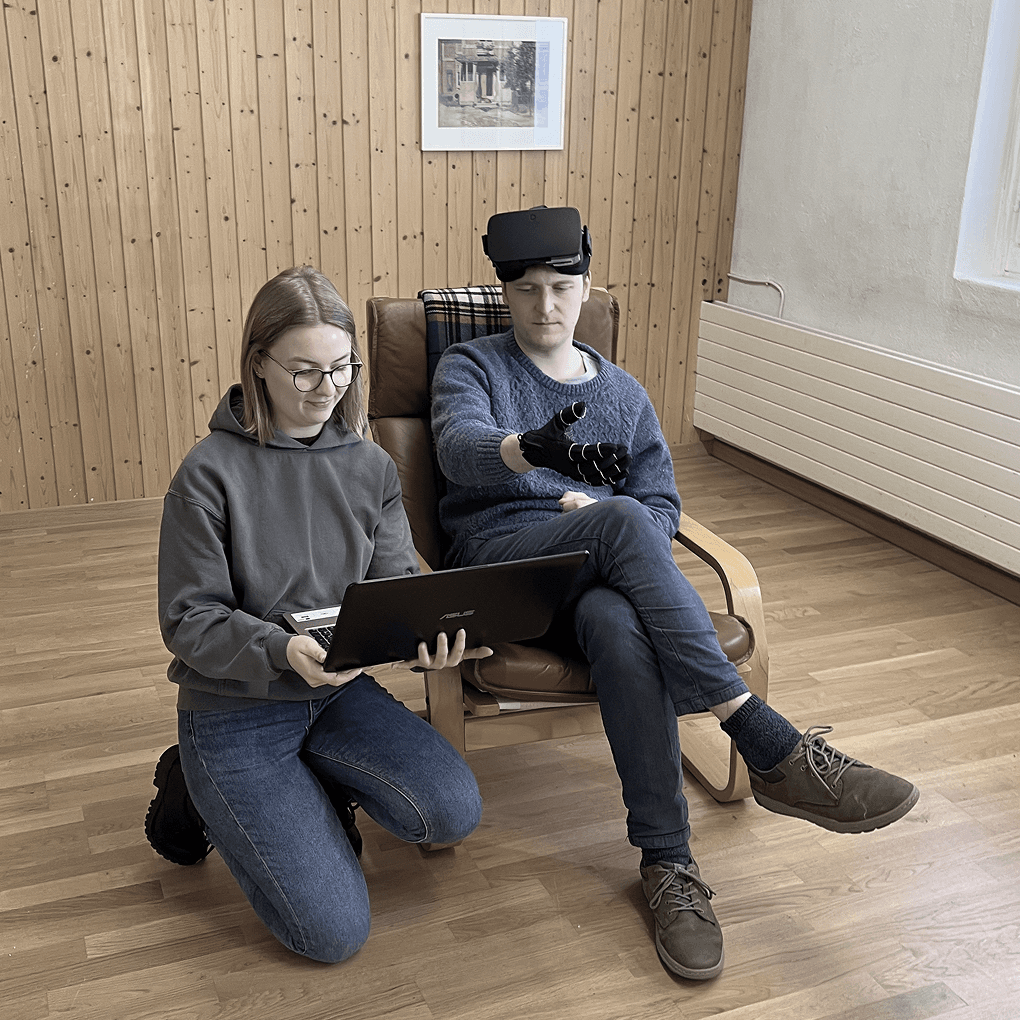
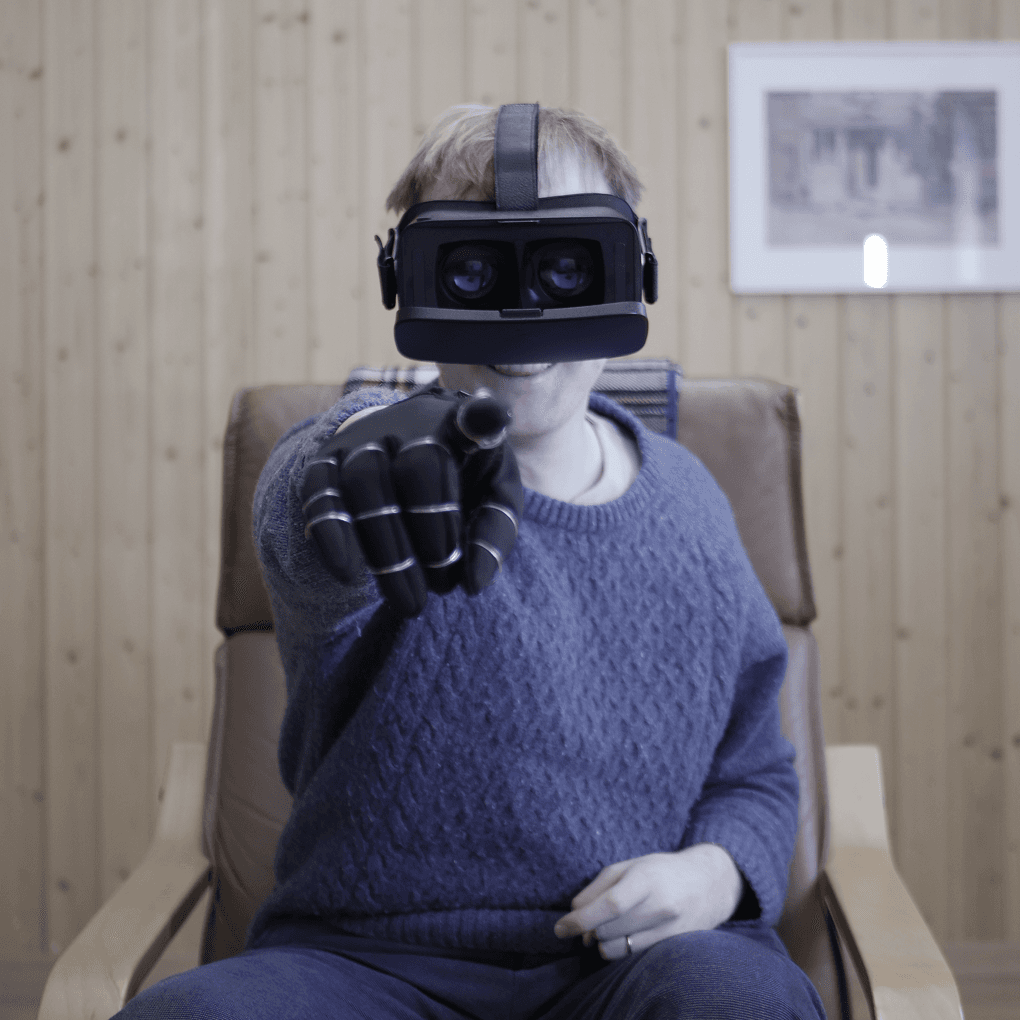
A VR headset allows patients to visually disconnect from everyday life and experience interactive exercises – from virtual gardening to astronaut training.
An exoskeleton glove provides direct haptic feedback and supports motor movements. At the same time, it measures data such as strength, mobility, and training duration.
An integrated AI adapts the exercises individually to user behavior.
- Ein interaktives, gamifiziertes Rehabilitationsprogramm
- Integration von Sensoren zur Echtzeit-Überwachung der Handfunktionen
- Regelmäßige Updates für behandelnde Ärzte über den Fortschritt der Patienten
Target Group
The solution primarily targets younger stroke patients who are tech-savvy and want to flexibly integrate their rehabilitation into everyday life. The therapy concept is also designed to appeal to forward-thinking physicians who are open to digital applications.
Category
APP, VR
Semester
3
Grade
1.0
Tools
Figma, Fiverr, InDesign, After Effects, Premium Pro
Keywords
My Tasks
As part of the project, I took on various tasks that encompassed both creative and technical aspects:
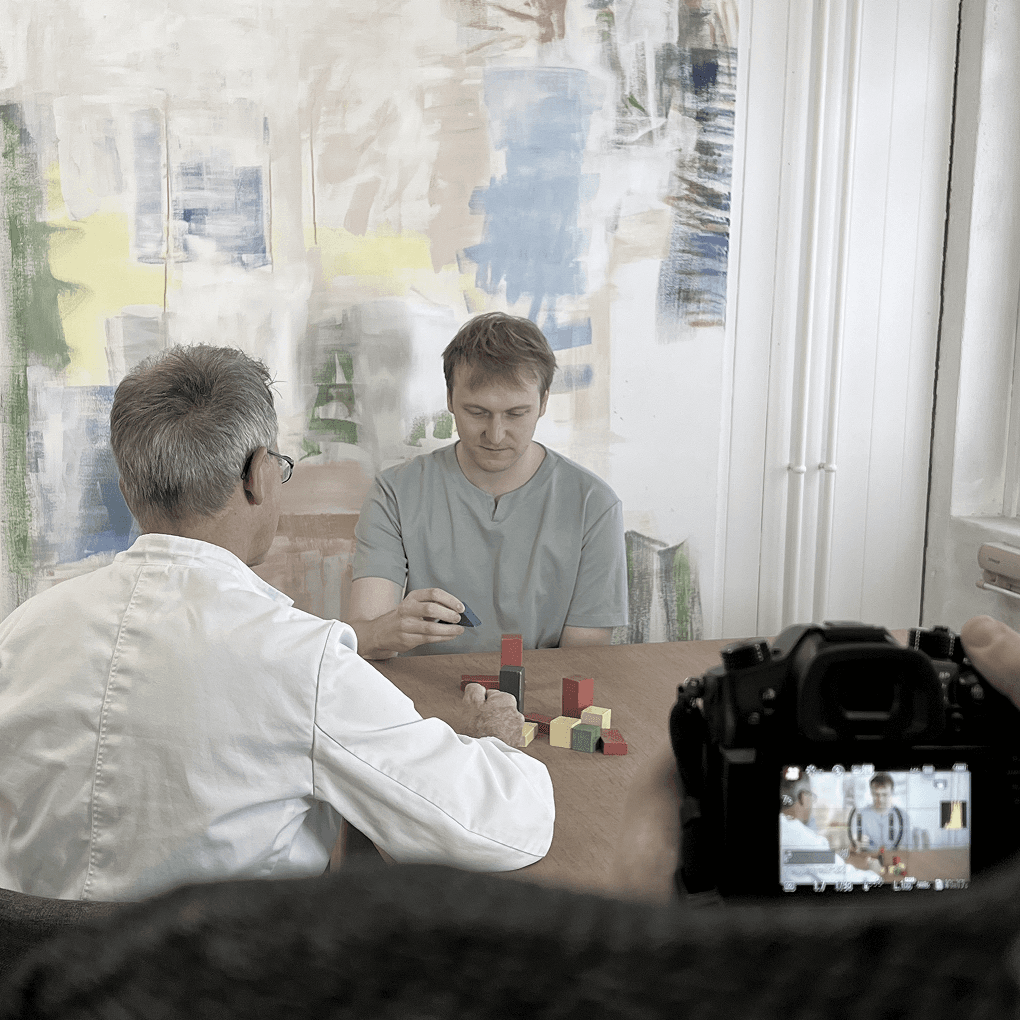
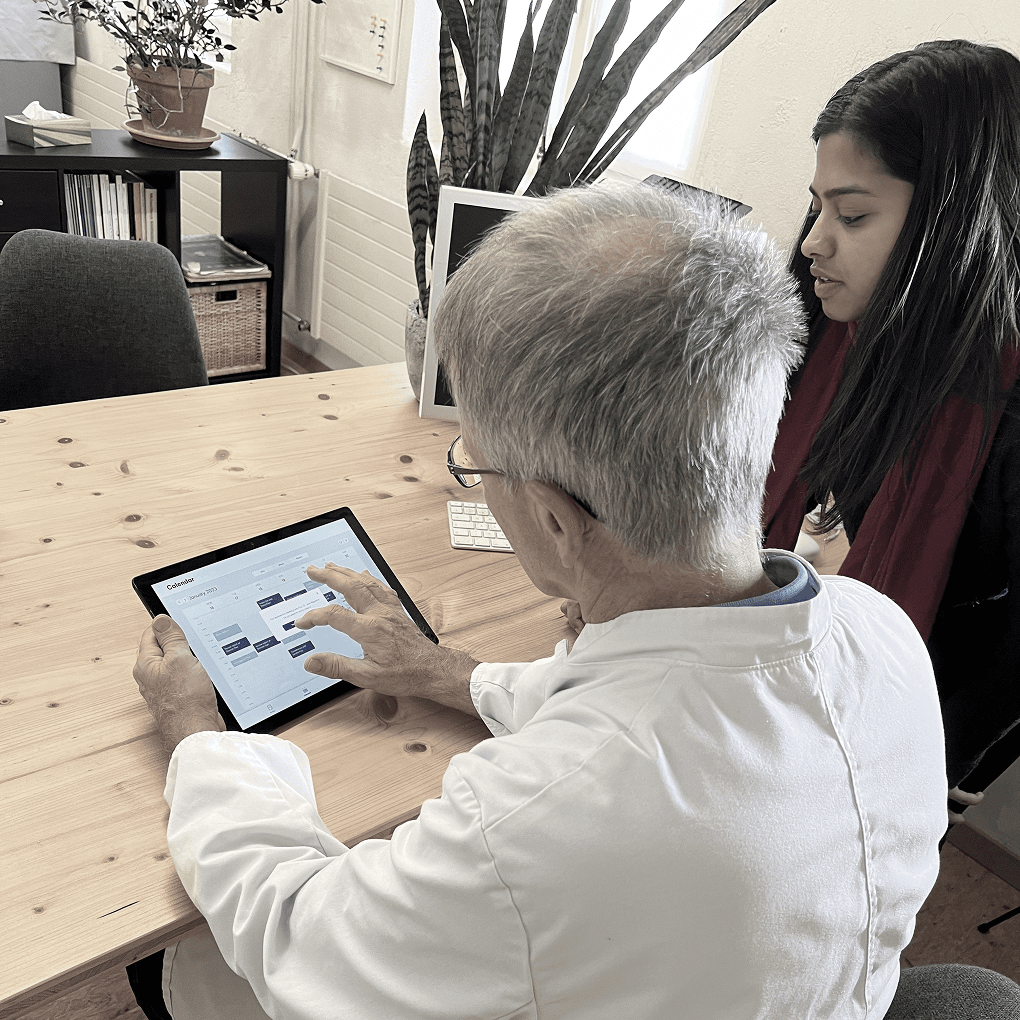
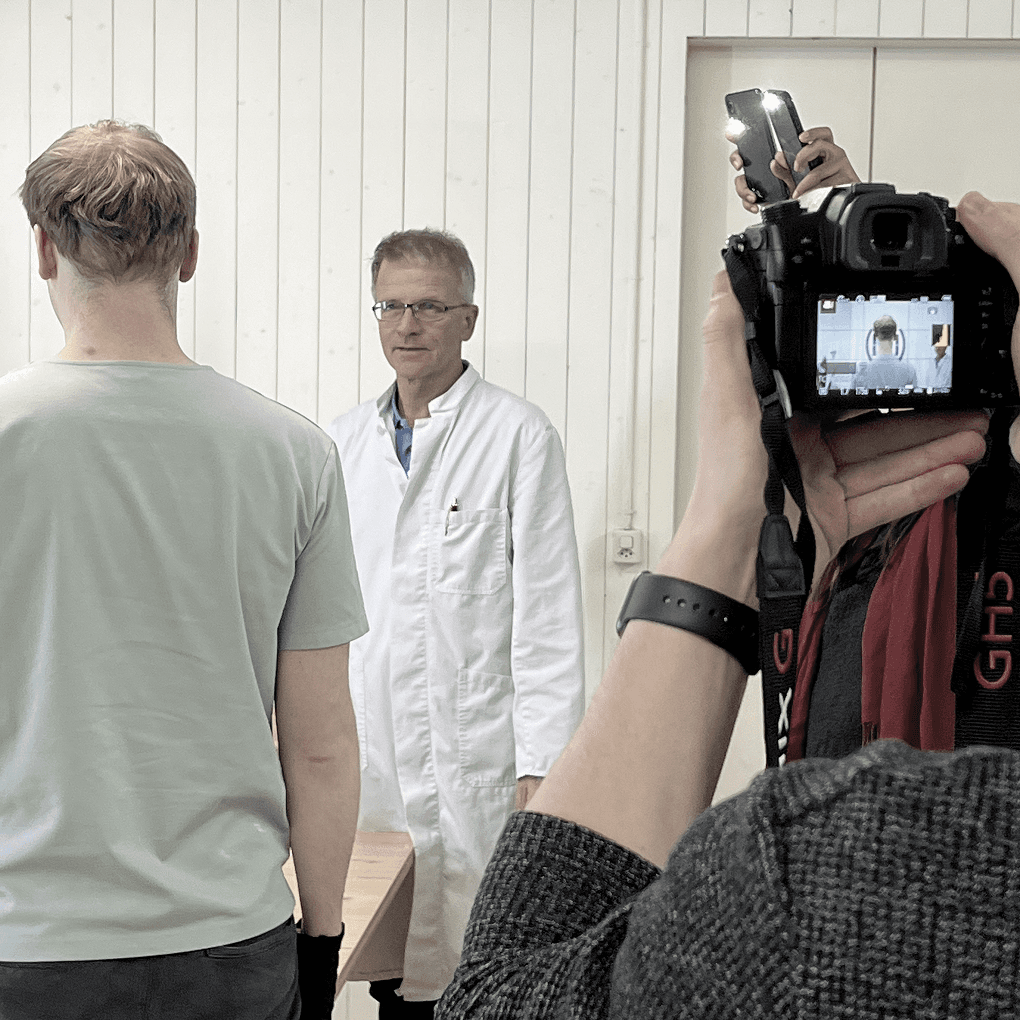
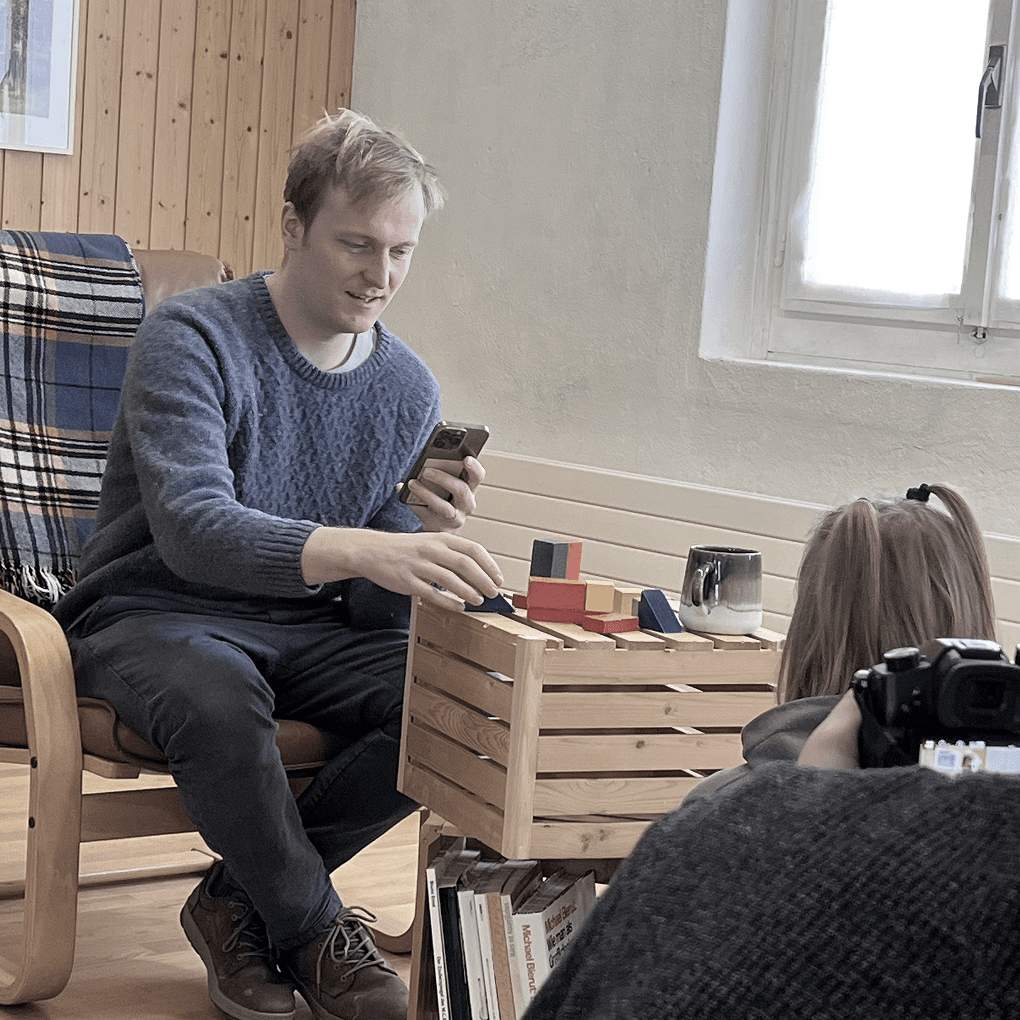
Organization & coordination of the filming (actors, props, location, VR headset, exoskeleton)
Creation of the storyboard in coordination with team members
Editing and post-production of the film (Adobe Premiere Pro, After Effects)
Preparation of the voice-over script, organization & communication with the voice-over
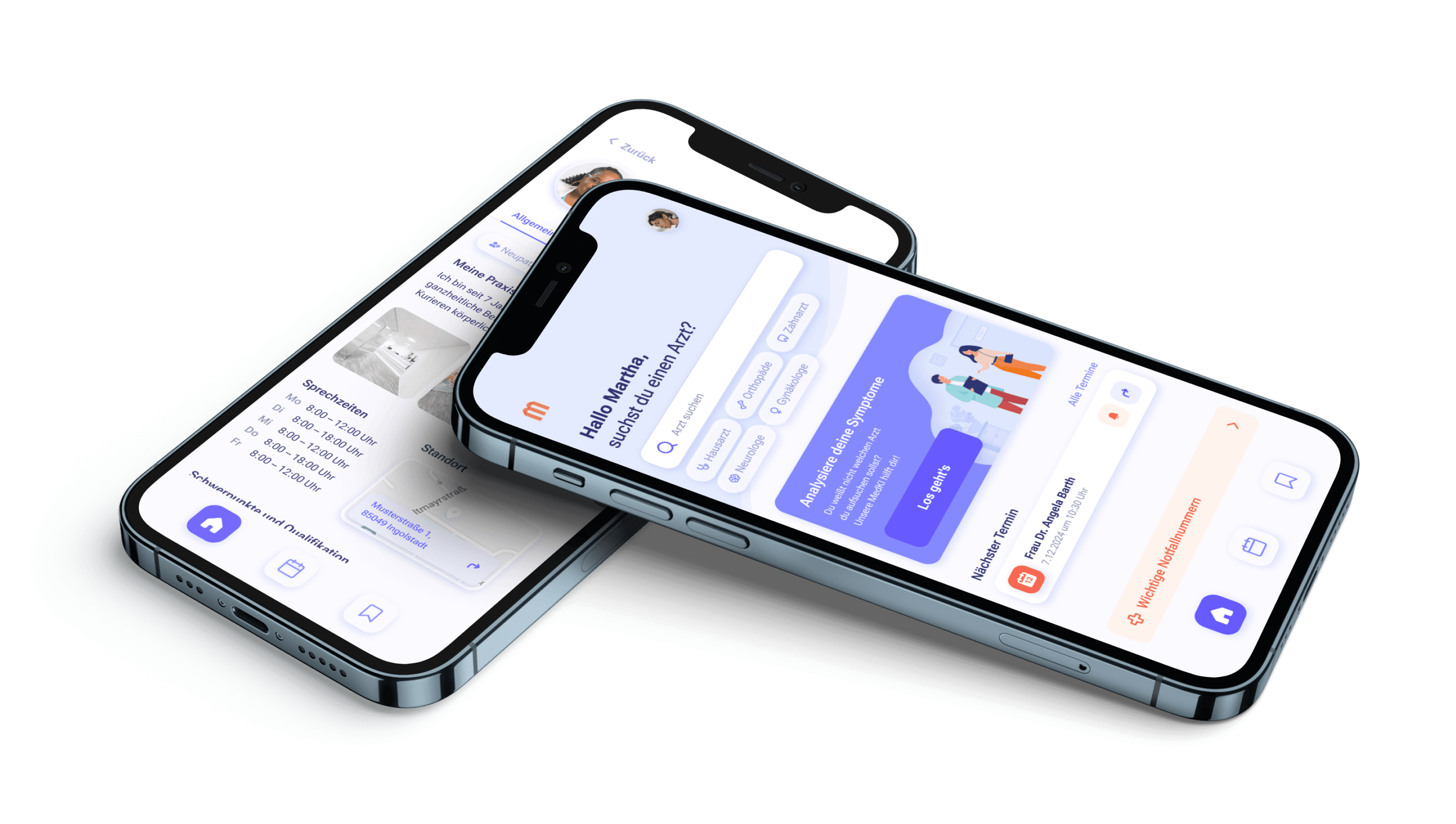
Support in creating screen designs in Figma
Sole implementation of Figma interactions for the interface
Behind the Scenes